



A standard rule of thumb for personal budgeting used to be spend about a quarter of your income on housing. (“A week for a month.”) Then that slowly inched up until the guideline became spend 30% of gross income on mortgage or rent. Today, 30% is at the low end of what many families spend.
Three decades ago, a person could typically buy a house for somewhere in the range of two- to- three times annual income. Today, a comparably sized house can easily run around six times annual income.
Another issue that folks who bought their house decades ago when interest rates were low might not realize is that starter homes for young families are hard to find. Part of the problem is that Michigan has a housing shortage due to restrictions that often make it difficult to build new units.
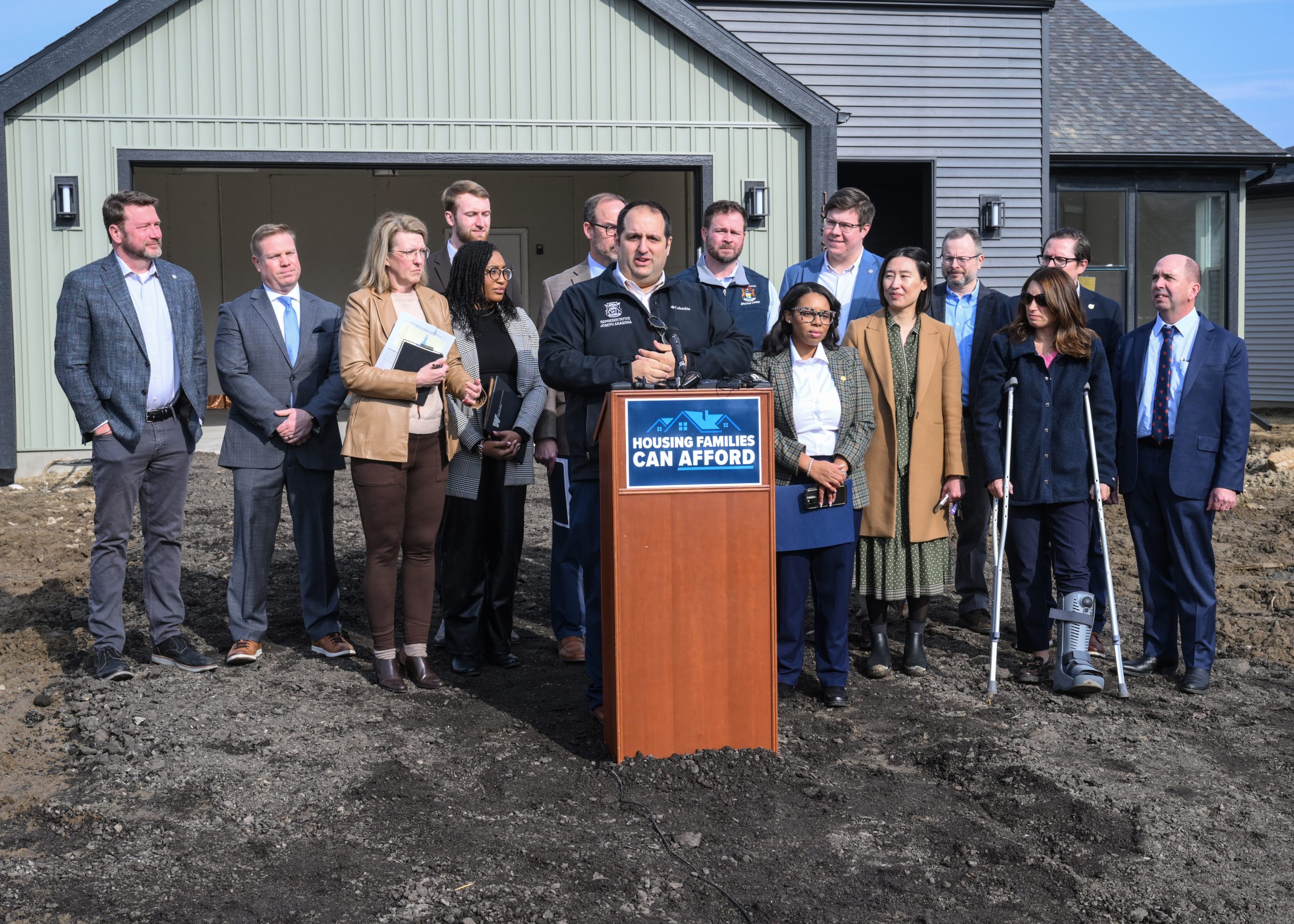
On Tuesday, a bipartisan group of lawmakers led by state Reps. Joe Aragona and Kristian Grant introduced legislation to lower the cost of housing for everyone by making it easier to build new homes, thus increasing supply.
Aragona (R-Clinton Township) serves as chair of the regulatory reform committee, which will take up the package of legislation soon after it is introduced this week. Grant (D-Grand Rapids) served as chair of the housing subcommittee last term. The two lawmakers, who are from opposite sides of the aisle and opposite sides of the state, have been working on these bills together since last term.
Grant said that the bills aim to reform zoning laws and reduce red tape, which will make homes more affordable.
“Throughout my time in the Legislature, I have worked to advance housing reforms that address the real pressures Michigan families are facing in this housing crisis. We cannot ignore the impact that limited supply and outdated systems have had on affordability and stability,” Grant said. “The bipartisan Housing Readiness Package modernizes our development processes to reduce unnecessary costs and delays, making housing more affordable and available across the state. This is about ensuring Michigan is prepared for growth and that more residents have access to safe, stable homes.”
There were approximately 54,000 new units on the market in 2005, but only about 15,000 in 2024, Aragona said. That is a drastic drop in the amount of available new housing.
“We need to make homes affordable again,” Aragona said. “One of the big reasons houses are so expensive now is because there’s an average of $95,000 in extra regulatory costs added on to the price before even buying materials or paying someone to swing a hammer.”
If approved, the key reforms in the legislative package will:
- Allow duplexes in single-family residential zones that are in, or adjacent to, metropolitan areas
- Prohibit minimum parking space requirements of more than one space per dwelling. This change means less land will be needed to build new units, which will lower costs and encourage walkable cities
- Update the procedure for protesting zoning changes in a way that ensures broad community input by expanding the petition area radius and setting a 60% signature threshold
- Define setback requirements in metropolitan areas at 15 feet from the front of the property line and five feet from the sides and rear (with exceptions for sensitive areas like marshes and waterways). This will allow for more efficient land use
- Cap minimum dwelling size requirements at 500 square feet, making it easier to build smaller and more affordable starter homes and apartments in areas where larger parcels may not be abundant
- Prohibit minimum lot size requirements of more than 1,500 square feet for single-family homes
- Allow Accessory Dwelling Units (ADUs) on parcels with single-family homes. The legislation also defines what constitutes an ADU, caps setback requirements, prohibits additional parking mandates and allows the ADU to be built on- or off-site. This will expand options for keeping families with aging parents or grandchildren close
- Reduce bureaucratic delays by creating standards for local governments to follow when reviewing development requests. This will limit repeat or unnecessary study demands that drag out the process, set a 60-day timeline for decisions, and ensure site plans are approved if they meet all requirements




© 2009 - 2026 Michigan House Republicans. All Rights Reserved.
This site is protected by reCAPTCHA and the Google Privacy Policy and Terms of Service apply.